

Justice Alito warns America must preserve 3 core principles regardless of country’s ‘atmosphere’
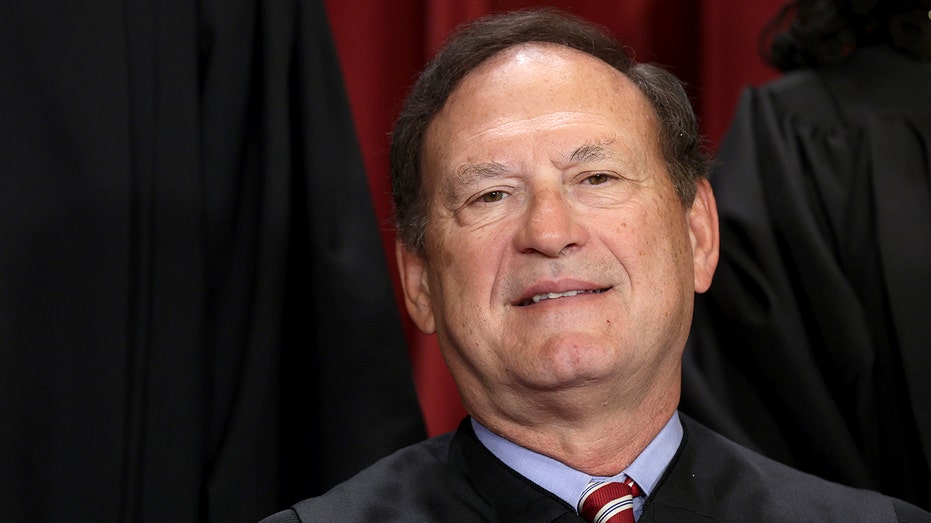
Supreme Court Justice Samuel Alito recently laid out three principles Americans must cling to to ensure the integrity of the republic: freedom of speech, religious liberty and racial equality. “I’m not saying we’re entering the dark age, but these are things that we have to preserve no matter what the atmosphere is in the country or the world at the time,” Alito said during a fireside chat with Mollie Hemingway, editor-in-chief at the Federalist, which followed the Antonin Scalia Memorial Dinner at the 2026 National Lawyer’s Convention in Washington D.C. The remarks come on the heels of the blue tsunami of the 2026 midterms, with Republicans losing 42 House seats and eight Senate seats, with the Alaska U.S. Senate race still uncalled. Democrats are set to take control of Congress with eight lawmakers backed by the Democratic Socialists of America. Both incoming and returning members have pressed for investigations and subpoenas targeting President Donald Trump and his administration. DEMOCRATS SEIZE HOUSE CONTROL IN STUNNING BLUE TSUNAMI, VOW RETRIBUTION AGAINST TRUMP ADMIN Alito’s remarks also come amid the ongoing Iran war, which has destabilized oil supply chains across the globe, causing the price of goods and gas to jump. The 76-year-old jurist said preserving freedom of speech is paramount, warning that “you cannot have Democratic self-fulfillment if you cannot have robust free speech.” “Even speech that is hurtful to some of the people who hear what is being said,” Alito said. He also stressed the importance of freedom of religion, even as the Supreme Court is set to rule on at least two major cases this term centered on religious freedom: St. Mary Catholic Parish v. Roy and Grand v. City of University Heights. SUPREME COURT OFFERS SUPPORT FOR CATHOLIC PRESCHOOLS CHALLENGING STATE FUNDING REQUIREMENTS “I think that we have placed religious liberty on a sounder footing than it was on 20, 25 years ago,” Alito said. “Religious liberty is central to human dignity, and in a society that is as religiously diverse as this country, we’ve got people who adhere to practically every religion that exists in the world,” Alito continued. “We are not going to be able to get along, I think, amicably, productively, if we don’t respect everybody’s right to follow whatever religion they want, or for people of faith, they’re also free to do that.” “That’s essential,” Alito said. He rounded off his trifecta by saying that America must maintain racial equality, declaring it “essential for our pluralistic society.” FEDERAL JUDGE TOSSES TRUMP ADMIN HARVARD ADMISSIONS LAWSUIT, LEAVES DOOR OPEN TO FUTURE CHALLENGE “That is the principle that Dr. Martin Luther King famously articulated in his speech at the Lincoln Memorial, where he said he looked forward to the day when children would be judged by the content of their character and not by the color of their skin,” Alito said. “If we don’t hold to that principle, then I think the society is going to start to come apart,” Alito said. The Supreme Court agreed in October to hear Association for Education Fairness v. Montgomery County Board of Education this term, a challenge brought by parents of Asian American students alleging that a Maryland school district’s admissions policies unlawfully discriminate despite appearing race-neutral. Alito mentioned the Supreme Court’s 2023 ruling in Students for Fair Admissions v. Harvard, which ended affirmative action in college admissions, as among the most consequential rulings from the Supreme Court in the past few decades. TRUMP CHEERS ALITO STAYING FOR ANOTHER SUPREME COURT TERM: ‘ONE OF THE GREATEST OF ALL TIME’ Alito’s discussion comes as questions swirl about his possible plans to retire. In a Bloomberg article published after the midterms, Alito said that the Democrats’ sweep did not change his plans to stay on the Supreme Court. Alito, nominated by President George W. Bush, has served on the bench since 2006. “With those, with those 20 years, I jumped to 42nd in the the list of all-time service by Supreme Court justices,” Alito said.
White House lawyer’s hardball warning to Dems has legal experts on both sides questioning one key threat
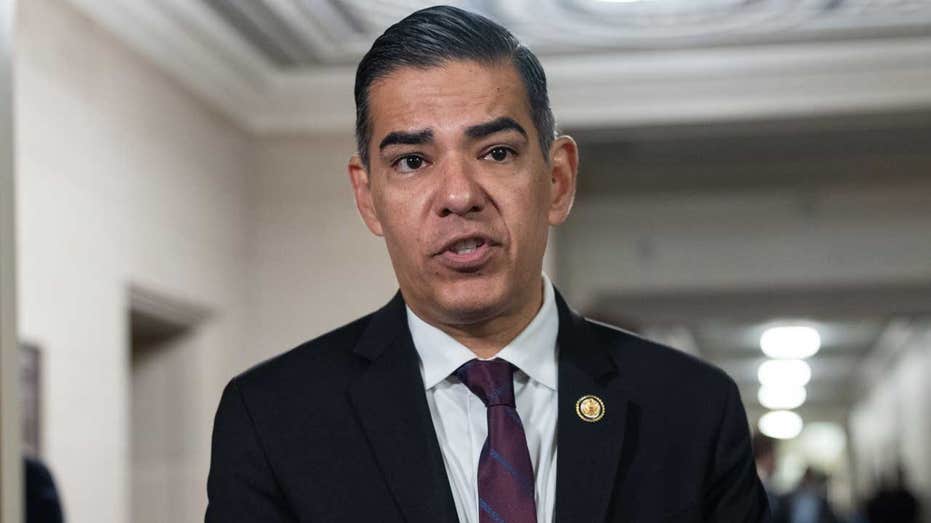
White House Counsel William Scharf sent a letter to California Democratic Rep. Robert Garcia, the House Committee on Oversight and Government Reform ranking member, Nov. 9, warning Democrats against running afoul of their allotted powers related to investigations and subpoenas. The letter put Democratic lawmakers on notice of the “foundational limits that the Constitution imposes on congressional investigations and subpoenas” and suggested their actions could cross the line of criminal misconduct. Garcia, poised to chair the committee next year when Democrats gain the House majority, responded to the letter by suggesting the president has “something to hide.” AG BLANCHE CLASHES WITH ANCHOR ASKING WHETHER IT’S HIS ‘JOB’ TO DEFEND THE TRUMP ADMINISTRATION Legal experts from across the political spectrum who spoke to Fox News Digital suggested that, while the White House is within its rights to challenge individual subpoenas, it faces significant obstacles if it decides to seek criminal indictments related to Garcia’s oversight activities. “In short, the administration can assert privileges, negotiate over requests and challenge particular subpoenas through the appropriate legal process, but criminal prosecutions are, to mix metaphors, a very different animal that face a higher bar,” Ilya Shapiro, director of constitutional studies at the right-of-center Manhattan Institute, told Fox News Digital. Congressional investigations also enjoy protections under the Constitution’s speech or debate clause, which the Supreme Court has held shields lawmakers from judicial interference when their investigative activities fall within the legitimate legislative sphere. Shapiro explained that Democrats “promising indiscriminate subpoenas are inviting challenges to their demands” because congressional committees “must act within their jurisdiction, respect witnesses’ constitutional rights and connect investigations to a legitimate legislative purpose.” Garcia, however, maintains that his calls for investigation are consistent with his constitutional authority as a lawmaker. “Let’s be clear: Congress’ authority comes from Article I of the Constitution, not from the permission of the White House. Congress has wide latitude to conduct investigations and oversight, an authority inherent in the power to legislate,” Garcia said in his statement. “The American people voted overwhelmingly for us to pass laws to root out corruption and abuse. The Trump administration continues to weaponize the government with threats of unconstitutional attacks on Congress. We are a co-equal branch of government and will not be deterred by baseless threats from a weaponized DOJ or from the president’s lawyers.” Scharf sent the letter a week after Democrats issued statements and social media posts calling for subpoenas and impeachment trials for Trump administration officials after Republicans’ major loss during the 2026 midterms. At the time, some pointed out that Republicans used similar language to call for investigations into Democratic officials. Hans von Spakovsky, a senior legal fellow at Advancing American Freedom and a constitutional law expert, told Fox News Digital Scharf is correct in his assertion that Garcia’s investigations cannot be motivated by simple spite but suggested the White House may run into problems if it tries to get criminal charges to stick. “Scharf is correct in his citation of Watkins v. U.S. that the Supreme Court has held that congressional investigations not connected to a legitimate legislative purpose and whose only intent is harassment and trying to seize personal, private information are unconstitutional and beyond the power of Congress,” von Spakovsky wrote in an email. “Problem is that I am not sure what criminal statutes, if any, could be applied. There are statutes over harassment of federal officials, 18 U.S.C. 111, 115, but those require physical threats. What the Watkins precedent holds is that the courts cannot enforce subpoenas issued by Congress that are part of an improper, unconstitutional investigation.” TOP DEM ON COMMITTEE FIRES BACK AFTER WHITE HOUSE COUNSEL WARNS AGAINST OVERREACH AMID INVESTIGATION THREATS “No statute makes oversight a crime, and Scharf’s letter doesn’t say one does. Its point is that a committee’s process doesn’t shield conduct that would be a crime for anyone else. Conspiring to intimidate federal officers out of doing their jobs falls under 18 U.S.C. 372,” Will Chamberlain, senior counsel at the right-of-center Article III Project, told Fox News Digital. “Congress’ oversight authority is broad but not unlimited. There is no congressional power to expose for the sake of exposure and any investigation requires a valid legislative purpose. Congressional investigative activity conducted in an official capacity wouldn’t be prosecutable.” He added that what could be prosecutable would be a separate conspiracy to intimidate federal officials “evidenced by threats, press releases, things of that nature.” Molly Nixon, a senior fellow at the libertarian Cato Institute, had broadly similar thoughts. “White House counsel is correct that courts have required congressional investigations to serve a legitimate legislative purpose, though the constitutional boundaries of that requirement are not as clear as Scharf asserts. I don’t think the letter is on solid ground when it makes the leap to suggesting potential criminality,” she told Fox News Digital. DEMS PIVOT FROM ‘AFFORDABILITY’ PITCH TO DHS PROBE THREATS AFTER MIDTERM WINS “We are monitoring the abusive and capricious threats that are now proliferating from Democrat legislators who seek to abuse the legislative process to intimidate and to interfere with the lawful functioning of government,” Scharf wrote. “Recent public statements underscore these concerns. You and your congressional colleagues have asserted that they will issue subpoenas to harass, threaten, and deter dedicated members of the Administration from further service. “Compulsory process is a power Congress has for oversight functions, and only for oversight functions. Abusive threats and public statements about the indiscriminate issuance of subpoenas, along with threats directed at prospective targets within the Administration make it abundantly clear that any forthcoming investigative processes will be deployed to harass and aggrandize, rather than to advance any legitimate legislative end,” the letter added. “Beyond being inconsistent with the clear, well-recognized constitutional limitations on your investigative functions, threats to executive branch officials designed to deter them from public service, or process designed merely to abuse or instill fear in the recipient may cross the line into blatant criminality,” the letter continued. “And issuing unlawful subpoenas with the intention
Dems seize on midterm rout to demand ICE reform but polls reveal a twist in who prioritized immigration

Democrats are seizing on their sweeping midterm victories to demand immigration reform, even as polling shows economic concerns far outpaced it as a priority for both Democratic and Hispanic voters. The push follows Democratic gains nationwide, including wins in Texas congressional districts redrawn to favor Republicans and major upsets in the state’s Senate and gubernatorial races. Some winners are casting the results as a mandate to challenge President Donald Trump’s immigration crackdown and putting prospective 2028 Democratic presidential candidates on notice. “Whoever wants to get our support in ’28 has to prioritize immigration reform, period,” Rep.-elect Bobby Pulido, D-Texas, who defeated Republican Rep. Monica De La Cruz in South Texas, said last Wednesday at a news conference alongside fellow Texas Democrats pushing for immigration reform. But Fox News Digital polling showed 27% of Republican voters ranked immigration as their top issue, compared to just 3% of Democrats. Pulido flipped a redrawn, Republican-leaning South Texas district, ousting De La Cruz, who won her re-election in 2024 by 14. 2 points. He campaigned on affordability while tying Trump’s immigration enforcement raids at worksites to workforce shortages that hurt the economy. REDISTRICTING EFFORTS BLOW UP IN REPUBLICANS’ FACES AMID HISTORIC HOUSE LOSSES Rep. Henry Cuellar, D-Texas, told Fox News Digital that voters who split their tickets between Trump and down-ballot Democrats in 2024 were responding this year to both affordability pressures and the president’s immigration crackdown. “He made a promise that he was going to bring prices down on day one. Liberation didn’t happen, so people remembered that,” Cuellar, whose district encompasses border town Laredo, told Fox News Digital. “Second thing is he said he was going to focus on criminals. He didn’t stop there. He started going after construction workers.” Democrats’ wins came as an estimated 14.5 million Latinos voted across the country in the 2026 midterms, according to UnidosUS. The group’s Texas state director, Eric Holguín, said Democratic support among Latino voters rivaled levels seen in 2008, when Barack Obama won the presidency. “Cost of living was the number one issue that we saw with Latino voters in Texas and across the country as well,” Holguín told Fox News Digital, referring to polling conducted by UnidosUS. Pre-election polling conducted by Fox News Voter Poll, showed that for 45% of polled Hispanic voters, the economy was the most important issue facing the country, followed by the state of democracy for 26% of voters and then immigration at 15%. FOX NEWS VOTER POLL: HOW DEMOCRATS TOOK CONTROL OF THE SENATE For Hispanics voting in Texas, polling followed a similar trend with the economy the number one issue for 45% of voters, the state of democracy for 25% of voters and immigration for 15%. “People right now, they see their pocketbooks, they see the bank accounts, they the grocery bills, they see they’re electric bills, they see there gas bills and they’re saying, ‘Hey, a lot of promises were made to us in 2024 by President Trump, and he’s had almost two years to deliver on those promises, and not only has he not delivered on those promise, he’s made them worse with the war in Iran!,’” Holguín said. Trump said that the Iran war hurt Republicans in the midterms, as conflict in the Strait of Hormuz has destabilized oil supply chains, causing gas prices to soar. Henry Olsen, a senior fellow at the Ethics and Public Policy Center, told Fox News Digital that voters were likely motivated by a rejection of Trump rather than enthusiasm for Democrats’ policies. “It was driven by an anger that the president hasn’t delivered on the promises that he made, particularly bringing down the cost of living and decreasing international tensions,” Olsen said. “People see that inflation is higher than when he took office, and America is involved militarily in more places than they were under the Biden administration, and that’s not what they thought they were getting.” HISPANIC VOTERS ARE NATURAL CONSERVATIVES. REAGAN KNEW. GOP NEEDS TO PROVE IT AGAIN During a 60 Minutes interview, Trump said some of his deportations policies were “too tough”and that a deal with Democrats was “doable.” Miguel Valenzuela, a business owner in Texas who joined American Families United for the Nov. 11 news conference, said he had spent years warning Republicans that their approach to immigration risked alienating Hispanic voters who otherwise shared some of the party’s values. “Hispanic values, family, faith, hardworking,” Valenzuela, who does not identify as a Democrat, told Fox News Digital. “That sounds like a Republican, right? “ Valenzuela said he had attended local Republican political events and urged the party to address immigration reform before pushing away an entire voting bloc. He argued that children of immigrants were reaching voting age and making their frustrations known at the ballot box. “Those kids have now became of age and they are voting. And since they are now voting, this is exactly what I had been warning about for years. And it happened last week,” Valenzuela said. SIGN UP TO GET THE POLITICS NEWSLETTER Holguín warned Democrats that keeping Latino voters’ support will depend on delivering results. “They’re put on notice right now. Everyone’s watching what they do,” Holguín said. “They’re looking for major change in how our government’s run and how our government delivers for the people.” Fox News Digital reached out to the White House for comment.
Democrats eye killing Senate filibuster as lawmaker warns move could be a ‘double-edged sword’
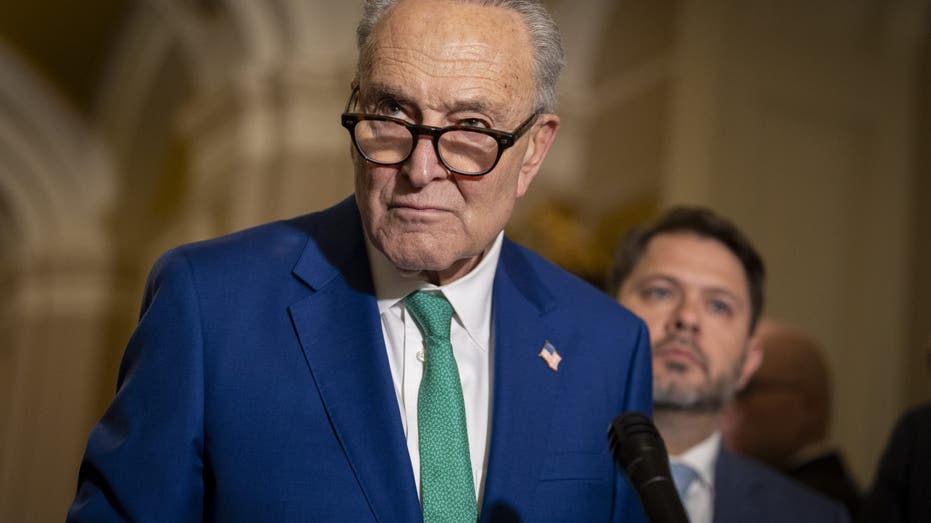
Democratic senators are leaving the door open to eliminating the Senate filibuster as their party prepares to take control of the chamber, with one lawmaker saying the move must be on the table while another warned it could be a “double-edged sword.” “Obviously, the filibuster is something that has to be on the table,” Sen. Ed Markey, D-Mass., told Fox News Digital when asked about Democrats’ plans for the chamber. But Sen. Andy Kim, D-N.J., warned that changing the rules could carry consequences long after Democrats leave power. SCHUMER, JEFFRIES SIDESTEP QUESTIONS ON NUKING FILIBUSTER, LAUNCHING ELON MUSK PROBE AFTER BLUE WAVE “Some of these things that we see here can be very much a double-edged sword,” Kim said. “I’m not saying that’s to deter us from doing it if we decide to do it. But I wanna make sure that everyone’s clear-eyed about what we’re doing.” Scrapping the Senate’s 60-vote hurdle would allow Democrats to advance most legislation with a simple majority, weakening Republicans‘ ability to block their agenda — but also giving the GOP the same advantage if it regains control. Fox News Digital pressed the senators on whether Democrats would consider changing the rules while President Donald Trump remains in office or wait until a potential Democratic presidential victory in 2028. “We’re discussing a progressive agenda right now and amongst the other Democratic senators,” Markey said. “So I’ll be listening to everyone’s views on what is the best strategy.” SCHUMER’S GRIP ON POWER SLIPS AS DEMS BEGIN TO REVOLT AGAINST HIM, EYE NEW LEADERSHIP Trump pressed Senate Republicans to abolish the filibuster when trying to pass the SAVE America Act, warning that Democrats would eliminate it if the party took back the majority — and now they have. Senate Minority Leader Chuck Schumer, D-N.Y., stayed silent when asked if he would support Democrats getting rid of the filibuster if they win the White House in 2028. Schumer is currently under scrutiny from progressives as the party considers who will lead the Senate after winning back the majority. Sen. Chris Van Hollen, D-Md., announced Thursday that he will be running against Schumer for Senate Majority Leader and is in favor of terminating the filibuster, even going as far as characterizing it as “anti-democratic.” “My personal view has been all along that the filibuster is an anti-democratic … provision. It’s not in our Constitution,” Van Hollen said. “It was put in there by senators to enhance their power over the power of the people.” SCHUMER FACES MUTINY FROM NEWLY ELECTED SENATE DEMS AS PARTY PREPARES TO SEIZE POWER Kim cautioned that changing Senate rules could set a precedent Democrats might later regret. “When you open the door…you gotta be ready,” Kim said. “You don’t wanna shoot from the hip when it comes to really big issues that are affecting our country in this way.” He suggested pushing legislation “through other means” before jumping to nuking the filibuster. “I think we as a caucus would need to think through…what would we want to pass such that that would be an obstacle, you know, and I think we should be pushing as much as we can through other means,” Kim said.
Dems descend on Denver to size up 2028. We asked who wants in the race

DENVER — Democrats are already making their case for 2028. Fresh off sweeping midterm victories, party leaders and rising stars descended on Denver for the “What’s Next” conference. Several potential presidential contenders tested their 2028 messaging before a crowd of activists, strategists and operatives. The conversations offered an early look at who may be considering a run and who is already stepping aside. Less than 24 hours after announcing a challenge to longtime Senate Democratic leader Sen. Chuck Schumer, D-N.Y., Sen. Chris Van Hollen, D-Md., told reporters he was “no longer pursuing” a presidential bid. SCHUMER’S LEADERSHIP RIVAL REVEALS MAJOR SENATE RULE CHANGE HE’D PURSUE IF ELECTED “I believe that the size and scale of these majorities, provides an opportunity for the United States Senate to answer the call of the American people,” Van Hollen told reporters in Denver, as he pointed what will be at least a 55-seat Democratic majority in the chamber. Van Hollen’s comments came as Sen. Cory Booker, D-N.J., weighed whether to make another run for the White House in 2028. Booker said he is giving “a lot of hard thought” to a potential 2028 presidential campaign, though he said his focus now is pushing for what he called an “American renewal.” “My purpose right now, I want to see America in the next five years have the biggest renewal, the biggest resetting of the economic table so it works for all Americans,” Booker told Fox News Digital. He pointed to the cost of housing, healthcare and childcare as evidence that many Americans are struggling to get ahead. “The gap I’m concerned about is not the gap between left and right anymore, it’s a gap between the American people and the American dream, and I want to see that gap close,” he said. Asked what he might do differently if he ran again after his unsuccessful 2020 campaign, Booker said candidates should be “their authentic self.” He also warned that political divisions are pulling the country apart, saying, “We are not each other’s enemies. We are our fellow patriots. And we all need to start pulling in the same direction.” While Van Hollen ruled out a presidential bid, former Transportation Secretary Pete Buttigieg, a 2020 Democratic candidate, told reporters in Denver he would not have “any news to make about that anytime soon.” Even so, Buttigieg has not ruled out another run. Pennsylvania Gov. Josh Shapiro, fresh off of major victories in his home state, said, “I’ve decided to be a loud voice in this process that we’re going through right now as a party to put ourselves in the best position to compete.” When asked about his 2028 timeline, Shapiro said “that would be a personal decision my wife and my kids and I make.” “When we’re ready to say something, we’ll let you know,” he added. Sen. Elissa Slotkin of Michigan told reporters that she was “seriously” considering a 2028 presidential run. “I haven’t made any decisions. Whether it’s me or somebody else, I just want to be a part of that next generation of leaders going forward that does things differently and understands who they serve,” she added. Pointing to a new crop of Democrats elected in the midterms, Slotkin said “we had an amazing election night that elected a whole bunch of new folks who represent that.” Meanwhile, Sen. Ruben Gallego of Arizona said his young family will be a major consideration in his decision. “I have three kids, nine, three and a one-year-old. You know, it’s hard to manage that schedule and I have to figure out how to still be a good dad and run for office,” he said. “If I run I’ll probably be the only one that has kids that age that doesn’t necessarily come from a lot of money. So I’m going to have to figure all that out,” he added. THE MISTAKE NEWLY ELECTED DEMS ADMIT THEY CAN’T AFFORD TO MAKE WITH TRUMP AFTER SWEEPING 2026 WINS Sen. Raphael Warnock, D-Ga., who has not said whether he will seek the 2028 nomination, used his speech at “What’s Next” to argue Democrats can build a winning coalition across the country. “In America, all things are possible,” he said, pointing to Democratic victories from New Hampshire to Mississippi. California Rep. Ro Khanna said he is “certainly considering” a 2028 presidential run but has not made a decision. Khanna, one of the few leaders on the progressive left attending a conference organized by a centrist Democratic group, added “I think after the reception here, I’m, more likely to consider it. I mean, but I’m going around the country seeing whether the message will resonate.” Asked about his timetable, Khanna told Fox News Digital, “I think starting next year people will be running.” “Imagine this, we’ve had three 80-year-old presidents in a row and suddenly you’re going to have a new generation on both sides. I think that’s fantastic for this country,” he said. “I’m excited about some of the people if I do run who would be competitors. It’s going to be great. It’s going to showcase America’s talent.” With no clear frontrunner in sight, the Denver conference offered an early look at Democrats testing their messages and weighing whether to seek the party’s nomination.
Dems’ California redistricting mastermind flips script after helping party win 5 GOP seats: ‘Kill’
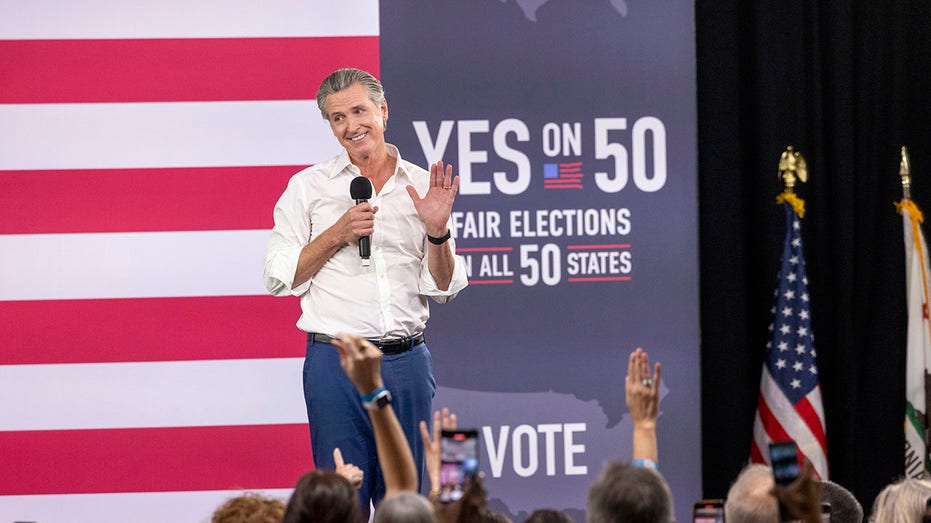
The architect of California’s Democratic-friendly redistricting plan, which helped the party flip five Republican-held House seats in November’s midterm elections, is now calling on Democrats to put an end to partisan gerrymandering nationwide. Paul Mitchell claimed in a San Francisco Chronicle op-ed published Wednesday that lawmakers should “kill partisan gerrymandering for good.” His comments come after California voters approved Proposition 50 in November 2025, temporarily replacing the state’s independently drawn congressional districts with a Democratic-friendly map for elections through 2030. Mitchell acknowledged in his op-ed that Proposition 50 was designed to benefit Democrats, but defended it as a temporary response to Republican-led redistricting efforts before calling for an end to partisan mapmaking altogether. “I wasn’t trying to do this [op-ed] to time with anyone’s efforts to do further gerrymandering,” Mitchell told Fox News Digital on Thursday evening. “I always planned on doing this as soon as the election was over, and I even did a CNN interview with Elex Michaelson during the election coverage where I said that the answer needs to be to stop this redistricting war and actually fix the problem.” REDISTRICTING EFFORTS BLOW UP IN REPUBLICANS’ FACES AMID HISTORIC HOUSE LOSSES Mitchell went on to say that Prop 50 was “the right response” to Texas Republicans’ redistricting push. “Prop 50 was the right response to what Republicans in TX were doing, but recall that when TX started doing this, our approach wasn’t to just start redistricting ourselves, we did a lot of work trying to get TX to not start the redistricting wars,” he told Fox News Digital. “If then someone had said “congress will be banning mid-decade redistricting” we would have been all for it. And I supported the legislation by Zoe Lofgren that would have [set up] national redistricting standards.” Mitchell argued that Republicans’ midterm losses could make them more receptive to redistricting reform after years of opposing it. “What makes now really important is that Republicans, who have opposed redistricting reform, should now realize that they lost in this war, so getting out of future wars is something maybe they would take more seriously now,” he told Fox News Digital. As for California, Mitchell believes the Proposition 50 maps will remain in place through 2030 and said the focus should be on restoring a fairer redistricting process in 2031. He called for Congress to prohibit mid-decade redistricting but argued that such a restriction alone would not prevent partisan gerrymandering when states redraw their maps after each census. “I think the best solution would be independent commissions in every state,” he said. The California Democratic Party touted Prop 50 as a “direct response to a Republican power grab orchestrated by President [Donald] Trump and state leaders in Texas, who redrew congressional district lines to gain five more seats in the U.S. House of Representatives.” Democratic California Gov. Gavin Newsom similarly claimed in a Nov. 4, 2025 social media post that Prop 50 “is about standing up to bullies like Donald Trump.” Mitchell’s recent op-ed also claims that gerrymandering can erode voters’ ability “to elect the candidates they prefer.” Democrats notably succeeded in flipping all five House seats in California targeted by the party’s redistricting push in the November midterm elections, the AP reported Nov. 4. BLOCKBUSTER SUPREME COURT VOTING RIGHTS RULING IGNITES REDISTRICTING WAR ACROSS SOUTHERN STATES “The incoming Congress should make national redistricting a priority, establishing minimum standards for how all states draw their districts,” Mitchell wrote in the opinion piece. Mitchell serves as the vice president of Political Data Inc., a California-based bipartisan voter data firm. He is also the owner of Redistricting Partners, a Sacramento-based data consulting firm. Mitchell, across his career, has conducted more than 100 redistrictings for states, cities, school boards and community college districts, including the State of New York Independent Redistricting Commission, the Los Angeles City Council Redistricting Commission and the Long Beach Independent Redistricting Commission, according to Redistricting Partners’ website. When asked about whether California’s gerrymandered maps were necessary during a Nov. 8 interview on “California Politics 360,” Mitchell said it would have been “a huge mistake” for Democrats to “sit” on their “laurels.” SIGN UP TO GET THE POLITICS NEWSLETTER Following Democrats’ sweeping victories in November’s midterm elections, some states have floated redrawing their congressional maps ahead of the 2028 election cycle, Roll Call reported Nov. 9. Meanwhile, outgoing Republican Georgia Gov. Brian Kemp said Nov. 4 that he would not call a special legislative session to redraw congressional maps or limit the powers of the incoming governor before his term ends in January 2027, WABE reported. “As long as I’m governor, we will always respect the results of secure, accessible, and fair elections, and also abide by the laws and constitution of our state,” Kemp said in a statement.
Anti-Trump Republican courts other defectors as House weighs another vote against Iran war

EXCLUSIVE: House Republicans and Democrats are preparing another effort to challenge President Donald Trump’s military operations in Iran, with lawmakers signaling that additional Republicans could break with the president and support a War Powers resolution. Rep. Thomas Massie, R-Ky., told Fox News Digital that another Iran War Powers resolution could come to the House floor “in the next few legislative days” or around Christmas. This would mark the fourth attempt this year to restrict Trump’s military actions against Iran. “I’m offering Republicans a life boat from MAGA,” Massie told Fox News Digital, expressing optimism that more members of his party could join the effort. 7 REPUBLICANS REBEL AGAINST TRUMP, VOTE WITH DEMS TO REIN IN IRAN WAR POWERS House Armed Services Committee Chairman Mike Rogers, R-Ala., told Fox News Digital that he would oppose the resolution but acknowledged that “Massie has been having conversations with members” in an effort to secure additional Republican support. Rep. Jeff Van Drew, R-N.J., echoed Rogers’ assessment, suggesting that “one or two” additional Republicans could join Massie and the Democrats who previously supported the measure. SWING-DISTRICT REPUBLICAN BREAKS WITH TRUMP, PUSHES LIMITS ON IRAN WAR Reps. Tom Barrett, R-Mich., Warren Davidson, R-Ohio, and Brian Fitzpatrick, R-Pa., previously voted in favor of an Iran War Powers resolution. Barrett told Fox News Digital on Thursday that he would maintain his support if the new resolution mirrors the previous legislation. “My position would be consistent for it,” Barrett said. However, Barrett expressed skepticism that additional Republicans would join the effort, noting that few members appeared willing to shift their positions during the previous vote. GOP HOLDS WITH TRUMP ON IRAN WAR, BUT CRACKS EMERGE AS DEADLINE NEARS Massie also acknowledged uncertainty over whether he could secure more Republican votes, criticizing his party’s continued support for Trump’s military operations. “Congress is paralyzed,” Massie told Fox News Digital, accusing Republicans of remaining “still in the suicide pact with this administration.” TRUMP SUFFERS RARE HOUSE DEFEAT AS BIPARTISAN VOTE MOVES TO WITHDRAW TROOPS FROM IRAN CONFLICT House Democrats, meanwhile, expressed optimism that Republicans’ losses in the 2026 midterm elections could encourage more GOP lawmakers to break with Trump’s foreign policy agenda. “If they’re listening to the people that sent them here, yes,” Rep. Ayanna Pressley, D-Mass., told Fox News Digital when asked whether additional Republicans could support the effort. “That’s what they should do.” Rep. Rosa DeLauro, D-Conn., also expressed confidence that more Republicans could join the effort, saying she “thinks they would.” Meanwhile, Rep. Adelita Grijalva, D-Ariz., suggested that Republicans may feel less pressure to remain aligned with Trump following the midterm elections — especially as many prepare to leave Congress and others hunker down to serve in the minority. “The threat of Trump dumping a lot of money into Republican districts is over, perhaps more members of Congress we think represent their communities will listen to what constituents are saying about the war,” Grijalva told Fox News Digital. TRUMP PLEDGES TO VETO ‘INSANE’ DEM BILLS, PINPOINTS ISSUE PARTIALLY TO BLAME FOR REPUBLICAN LOSSES The renewed effort comes as lawmakers continue debating Congress’ constitutional authority over military operations and the president’s ability to conduct sustained hostilities without congressional authorization. Under the Constitution, Congress holds the power to declare war, while the president serves as commander in chief of the armed forces. The War Powers Resolution of 1973 establishes procedures and limits for military operations conducted without congressional authorization. Despite growing discussions among lawmakers, no vote on an Iran War Powers resolution has been scheduled or confirmed.
Florida Republican on Democrats’ strategy: ‘That’s the choice they have to make…persecution or policy’
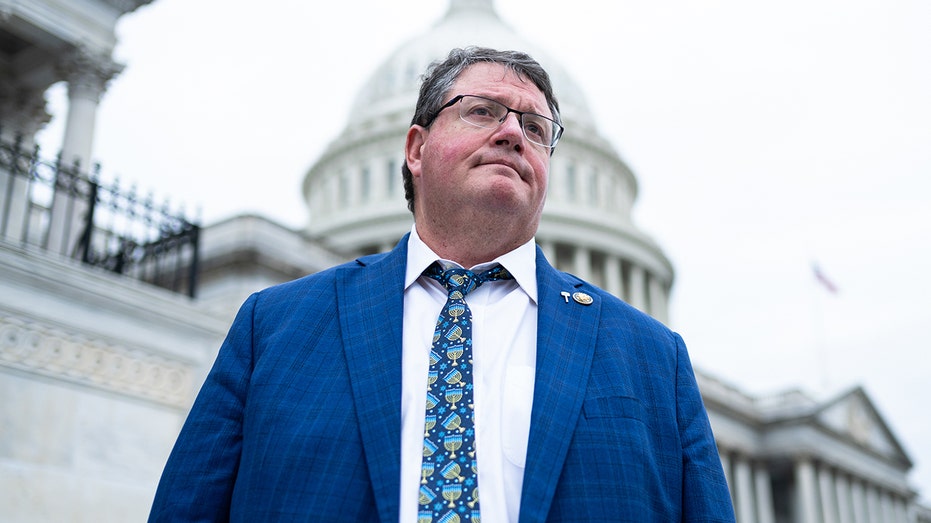
Florida’s Rep. Randy Fine has a blunt prescription for a House Republican conference staring down a steep Democratic majority in January: stop worrying about compromise, hand the minority gavel to Rep. Jim Jordan, and start fighting, suggesting that Democrats will likely pursue political persecution as the main focus in the next Congress. In a wide-ranging interview with Fox News Digital, Fine—who expanded his own victory margin to 19 points even as Republicans lost control of the chamber—argued that voters punished the GOP not for its policies, but because they didn’t see lawmakers willing to go to the mat for them. ‘HE BLAMED THE JEWS’: GOP CONGRESSMAN LEVELS EXPLOSIVE ACCUSATION AGAINST JD VANCE OVER ELECTION POSTMORTEM For Fine, the message sent by Jordan’s election is unambiguous: “Well, it says to me that we’re ready to fight back. I mean, Jim Jordan has two unique qualifications for the job. “One, he’s our best fighter. He protected and fought for President Trump during the ridiculous impeachments of President Trump’s first term. He’s just somebody who knows how to go into the arena and fight back. “But the second thing is, he’s an extraordinary communicator. And over the next two years, we are in a very diminished minority. That’s going to be our greatest strength, is to point out why the Democratic policies won’t actually improve anyone’s lives, and to point out the policies that we would propose that will. So, as a fighter and a communicator, I think he’s very well positioned to lead us for the next two years.” Fine downplays policy as the primary driver of the disastrous 2026 blue tsunami: “I don’t know that we need to change our policies. And I don’t even know how much of our messaging we need to change. What we need to do is we need to fight. I believe that we lost the election because voters thought we didn’t care about their problems, because they didn’t see us fighting to solve them. “Voters will vote for you if they see you fighting, even if you fail. But they won’t vote for you if they don’t see you fighting. Now I’m a guy who defied the odds. I increased my margin in the election. I may be the only Republican in the country to do that. I won my last election by 14, I won this one by 19.” With House Republicans shifting from passing bills to playing defense after electing Rep. Jim Jordan to succeed outgoing Speaker Mike Johnson as minority leader, Fine drew a sharp line between the two leadership roles. “Well, it’s a very different job. Look, I think if we kept the majority, I think Mike Johnson would still be the speaker. The speaker’s job and the minority leader’s job are completely different. So Mike Johnson’s job for the next 50 plus days is to try to get as many good things passed through the House as he can. FLORIDA CONGRESSMAN DIAGNOSES GOP’S BLUE TSUNAMI LOSSES: ‘WE FAILED TO MAKE THEM THINK WE CARED ABOUT THEM’ “Jim Jordan’s not going to be able to pass anything. The Democrats could have a 90 to 100 vote majority. His job is going to be to fight back when they’re impeaching and they’re interrogating and they are being vindictive, but also again to communicate why their policies will not make people’s lives better. “They’re going to come out and say Medicare for all. We’re going to have to say, ‘No, no there’s no such thing. It’s going to be Medicaid for all. When you give it to everyone, everyone will suffer. We’ll end up like Canada where there are death panels or the UK where you can wait a year or two to get to a doctor.’ That’s what we’re going to have to do: fight back and communicate. That’s a very different job than what Mike Johnson had to do the last two years.” Gridlock may be the persistent feature of the next Congress, but Fine does not completely discard the potential for compromise: “Well, first off, compromise isn’t inevitable. We may not do very much for the next two years. And I think that’s the most likely outcome. Democrats pass ridiculous things, President Trump vetoes them, and then we uphold the veto in the House and the Senate. I think that’s the most likely outcome for the next two years. “If it relates to compromise, you have to see what we’re offered. So, for example, if Democrats would agree to voter ID, which is a huge thing the American people want, they might be able to extract a concession from us. If they’re willing to stop so much of the ridiculous immigration into this country, they might be able to get concessions from us on other things. So, the problem is this: to Democrats, compromise means we give them what they want. It’s always a one-way street. “It’s funny, when Democrats win, they say elections have consequences. When we win, they say we need to be bipartisan. And that’s how their viewpoint is. They never come to our side of the world. So I’ll see if they want to compromise. I’ll be open to it. But it will truly require us getting some of the things that we want that they have fought us on for the time I’ve been in Congress.” On foreign policy objectives, Fine points to several Democrats he’s prepared to work with, while clarifying his position on Israel: “Sure. I mean, look, in the Senate, you’ve got John Fetterman, who I think is an incredibly strong advocate for Western civilization. I don’t think it’s fair to say I’m an advocate for Israel. That makes it sound like I’m just an advocate for a country. It’s more than that. “The United States and Israel are the only two countries in the world that are unambiguously standing up to Muslim terror, which seeks to fundamentally redefine life for all of us around the world. So I’m on the
GOP midterm bloodbath exposes cracks in Vance’s 2028 White House ambitions

Vice President JD Vance has long been viewed as President Donald Trump’s heir apparent, but a string of developments following Republicans’ bruising midterm losses is raising new questions about his potential path to the White House in 2028. Vance is facing criticism from some Republicans over his explanation for the party’s election defeats, particularly his decision to blame the Iran war. Meanwhile, other prominent Republicans are beginning to draw support for potential 2028 bids, complicating the political picture for the vice president. The political debate follows a devastating election for Republicans, who lost their majorities in both chambers of Congress beginning next year, with at least 30 GOP House members losing their races. The losses have prompted competing explanations from within the party over what went wrong and what Republicans should do differently. Some of Vance’s allies have reportedly urged him to consider sitting out the 2028 race following the midterm losses, The Wall Street Journal reported Nov. 7. However, others close to the vice president still expect him to run, The Washington Post reported Friday, underscoring the uncertainty surrounding his political future. TRUMP SAYS HE DOESN’T DISAGREE WITH VANCE THAT IRAN WAR FUELED GOP LOSSES A Vance ally pushed back on suggestions that the midterm losses have diminished his 2028 prospects, saying the vice president will decide whether to run on his own timeline. The ally also argued that Vance would be better served by winning a competitive Republican primary than being handed the nomination, expressing confidence in his ability to prevail if he runs. In a Nov. 4 post on X, Vance identified several concerns among voters who abandoned Republicans, including inflation, America First priorities and the U.S. relationship with Israel, but singled out the Iran war as the main reason for the party’s defeats. “The reason we lost is the war. The president himself said so last night,” Vance wrote, adding that Republicans needed to acknowledge the political cost of the conflict as they consider where to go next. The post drew sharp criticism from Rep. Randy Fine, R-Fla., who told Fox’ LiveNOW in a Nov. 8 interview that he would not support Vance in a potential 2028 presidential primary. PENCE DELIVERS SCATHING REBUKE OF VANCE’S IRAN WAR ASSESSMENT, BLAMES TRUMP POLICIES FOR GOP LOSSES “I definitively will not be supporting the vice president in that nominating contest,” Fine said, comparing Vance’s remarks to rhetoric from “1932 Germany.” Fine, who is Jewish, accused Vance of blaming Jewish people for the Republican losses, pointing to his criticism of the war and the pollster’s finding that some voters wanted a change in America’s relationship with Israel. Vance did not explicitly blame Jewish people in his post, and his office previously declined to respond to Fine’s characterization. VANCE COURTING DISGRUNTLED TRUMP VOTERS TO FORM ‘NEW RIGHT’ ALLIANCE AFTER REPUBLICAN BLOODBATH, SOURCES SAY Some Republicans are already expressing support for possible alternatives to Vance. Rep. Marlin Stutzman, R-Ind., told Fox News Digital after the midterms that he was “all in” for Secretary of State Marco Rubio, describing him as a potential unifying figure for Republicans following their election losses. Rubio is among several prominent Republicans whose names have surfaced as possible 2028 presidential contenders, along with Florida Gov. Ron DeSantis and Sen. Ted Cruz of Texas. Former Vice President Mike Pence also disputed Vance’s explanation for Republicans’ midterm losses, arguing in an exclusive Fox News Digital interview Thursday that voters had grown frustrated not because Trump launched the Iran war, but because his administration failed to finish it. “There’s no question that the war in Iran became a frustration for millions of Americans, but it wasn’t because President Trump started the war or took on Iran. It’s because we stopped short and didn’t finish it,” Pence said. “As Americans saw the politics of appeasement that the administration embraced, one negotiation after another, I think people became … frustrated with the lack of progress, frustrated with the price of fuel at the pump.” Trump, meanwhile, has publicly defended Vance’s assessment of the midterms, rejecting suggestions that the remarks damaged their relationship. “No, not at all,” Trump told reporters Sunday when asked whether Vance’s comments had strained their relationship, according to The Hill. But the president also stood by his decision to launch the war, arguing that he would make the same choice again despite the political fallout. Donald Trump Jr. also backed Vance’s assessment, writing “Every word of this is [100 emojis]” in response to his Nov. 4 post on X. On Thursday, Trump directed Vance to focus his attention on alleged corruption and crime in Democratic-led cities and states rather than pursuing negotiations with Iran, declaring that the United States no longer needed a deal with Tehran. Vance had played a central role in diplomatic efforts involving Iran, including negotiations over a short-lived truce earlier this year. “The Blue States, such as Minnesota, California, Illinois, and many more, are all poorly run, corrupt disasters,” Trump wrote in the post. “Billions of Dollars is being stolen each and every month. Our Budget could be quickly BALANCED with the correction of this large scale criminal activity. CORRUPTION is in the Democrat Leadership’s blood!” “We don’t need a deal with Iran. Those days have long since passed. We’ve got their money, Hundreds of Billions of Dollars, and we’ve got their Strait!” the president continued. VANCE ‘PRIVATELY’ BLASTS NETANYAHU AS IRAN WAR DIVIDES TRUMP ADMINISTRATION AND 2028 AMBITIONS LOOM Trump has previously signaled support for Vance as his potential successor, telling donors during an Oval Office meeting over the summer that Republicans needed to elect the vice president in 2028, Fox News Digital reported at the time. But Trump has stopped short of publicly endorsing Vance, and the president has continued to leave open the possibility of other Republicans entering the race. When asked on Nov. 4 whether he had talked about a prospective 2028 White House run with Vance, Trump replied that the two discuss “a lot of things,” Axios reported. Trump added:
One industry surged DC lobbying 337% under Trump — here’s what’s driving the push
FIRST ON FOX: President Donald Trump has made tariffs a centerpiece of his trade agenda, and businesses are spending more on D.C. bureaucrats to help navigate those rules. Rachel Greszler, who authored a new report from Advancing American Freedom (AAF), said companies are paying lobbyists to seek exemptions from tariffs instead of using that money to grow their businesses, hire workers or raise wages. A new report from former Vice President Mike Pence’s group found that lobbying disclosures mention tariffs rising 239% in the third quarter of 2026 compared with the same period in 2024. The total spending reported on those filings jumped 337%, though it may include lobbying on issues beyond tariffs. A MUST-WIN MIDTERM STATE IS THE REAL LOSER OF TRUMP’S CANADA TRADE WAR “Affordability is top of mind for many Americans,” Greszler told Fox News Digital, arguing that changing tariffs are raising costs, threatening jobs and squeezing paychecks. Businesses are responding by stepping up their lobbying efforts. Fourteen organizations spent more than $1 million on lobbying in the third quarter, up from two in the same quarter of 2024. Another 105 spent more than $100,000, compared with 26 two years earlier. Tariffs may also be affecting prices consumers pay. TRUMP BET TARIFFS WOULD BRING BACK AMERICAN FACTORY JOBS. NEW REPORT SAYS IT DIDN’T WORK FLOURISH NY FED TARIFFS CHART: 30552508 Federal Reserve Bank of New York researchers estimated they added 2.9 percentage points to prices across the consumer goods they studied, including imported and U.S.-made products. Greszler warned that small businesses unable to afford lobbyists to seek tariff exclusions could be forced to scale back or close. Trump has defended tariffs as a central part of his trade agenda, arguing they will strengthen U.S. manufacturing and bring jobs and investment back to the country. The White House has also said foreign exporters will ultimately bear the cost. FLOURISH TARIFF REVENUES CHART: 30871804 A separate analysis from Advancing American Freedom estimated tariffs resulted in about 75,000 fewer manufacturing jobs in their first year and up to 1 million fewer jobs nationwide than would have been expected under pre-tariff trends. The group said manufacturing was among the hardest-hit sectors, despite being a central target of the administration’s effort to bring factory work back. The group also said U.S. trade with Canada fell by $50 billion, or 6.5%, before the latest round of Section 338 tariffs took effect. During that period, imports from other countries rose instead of U.S. manufacturing expanding. As the administration continues to reshape trade policy, businesses will have to decide whether to keep spending on lobbyists and tariff planning or delay investments, hiring and expansion until the rules become clearer.