

Kansas Senate rivals distance themselves from party leaders in fiery debate
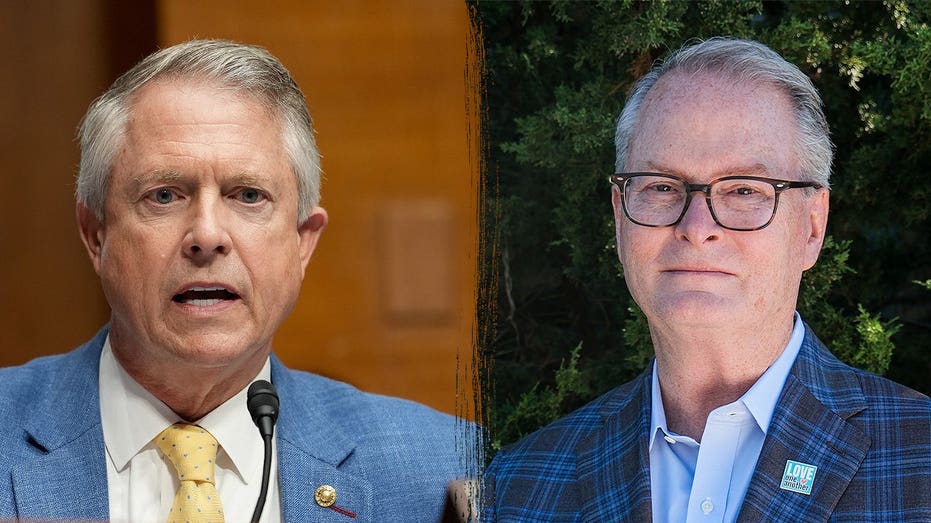
Sen. Roger Marshall, R-Kan., and Democratic challenger Adam Hamilton repeatedly sought to distance themselves from the most unpopular elements of their respective parties Wednesday night during a contentious Kansas Senate debate. Both candidates battled over President Donald Trump, immigration, the war in Iran and more in a race that could help determine control of the Senate. The debate opened on a personal note, with both candidates pressed over controversies that have fueled attack ads in the closing weeks of the campaign. Marshall was questioned about a New York Times review that found his former medical practice sued more than 700 patients over unpaid bills. The Republican defended the practice while emphasizing the millions of dollars in free care his practice provided. GOP SENATOR ALLEGES SCHUMER BEHIND ‘HIT JOB’ REPORT ON FORMER PATIENTS “Every year we gave away $3 to $4 million of charity, but we also had a business,” Marshall said. “We had 300 employees, we had a mortgage payment, we had electric.” Hamilton, meanwhile, was questioned about his handling of allegations involving a volunteer at his church’s summer camp alleged to have been a sexual predator. Hamilton acknowledged that he should have ensured the individual did not return to the camp after an initial investigation. “I should have checked to make sure that he wasn’t going back,” Hamilton said. “That was a mistake on my part.” The candidates spent much of the rest of the debate trying to define each other by their respective national parties. Marshall repeatedly warned that electing Hamilton would help hand control of the Senate to Democrats and Senate Minority Leader Chuck Schumer, while Hamilton sought to portray himself as an independent-minded Democrat willing to break with his party. THE NINE KEY RACES THAT WILL DECIDE WHO CONTROLS THE SENATE, AND WHERE THEY STAND That divide came into focus when the moderator played footage of Trump campaigning for Marshall in Kansas earlier this week and telling voters to “pretend, please, that I’m on the ballot.” Asked whether that meant he would support every part of Trump’s agenda, Marshall said no and pointed to recent disagreements involving immigration enforcement in southwest Kansas and beef imports. “Just like with my wife, I can disagree with her. My wife is always right,” Marshall joked. “And President Trump is not always right.” Nevertheless, Marshall emphasized his support for much of Trump’s agenda and urged the president’s supporters to turn out for him. “We need the Trump voters to come out,” Marshall said. “If you want the Trump agenda to continue, if you want secure borders, if you want a strong military, if you want lower taxes, then you â and you voted for President Trump â you need to come out.” Hamilton faced a similar challenge when moderators pressed him over his past support for Democrats and his campaign message of “leading from the middle.” MANCHIN CALLS SCHUMER ‘CRAZY’ FOR TRYING TO OUST GOP SENATOR IN CRUCIAL SENATE SHOWDOWN The Democratic nominee explicitly broke with former President Joe Biden over immigration. “The Biden policies when it came to the border were a disaster,” Hamilton said. “I believe in strong and secure borders.” Hamilton also said he would not support Schumer for majority leader if Democrats win control of the Senate. The debate did produce an unusual moment of agreement when both candidates were asked how many genders there are. “There’s two. There’s a boy and there’s a girl,” Marshall said. “There are two genders, male and female,” Hamilton responded. SC DEM SENATE CANDIDATE CLAIMS SHE WILL STAND UP TO HER PARTY AS GRAHAM TIES HER TO ‘SOCIALIST DEMOCRATS’ Hamilton later said he did not want biological males competing against his 12-year-old granddaughter in sports, calling it “not a fair fight,” while arguing that decisions over athletic participation should generally be handled locally rather than by the federal government. The Kansas contest has emerged as an unexpectedly competitive Senate race in the closing weeks of the midterms. Marshall is seeking a second term in a state that has not elected a Democratic U.S. senator since 1932, while Hamilton, a longtime pastor, has campaigned as a moderate Democrat. Trump traveled to Kansas Monday to campaign for Marshall as Republicans work to defend the seat with control of the Senate at stake.
Mass firings vow sparks clash with Klobuchar over Walz fraud legacy
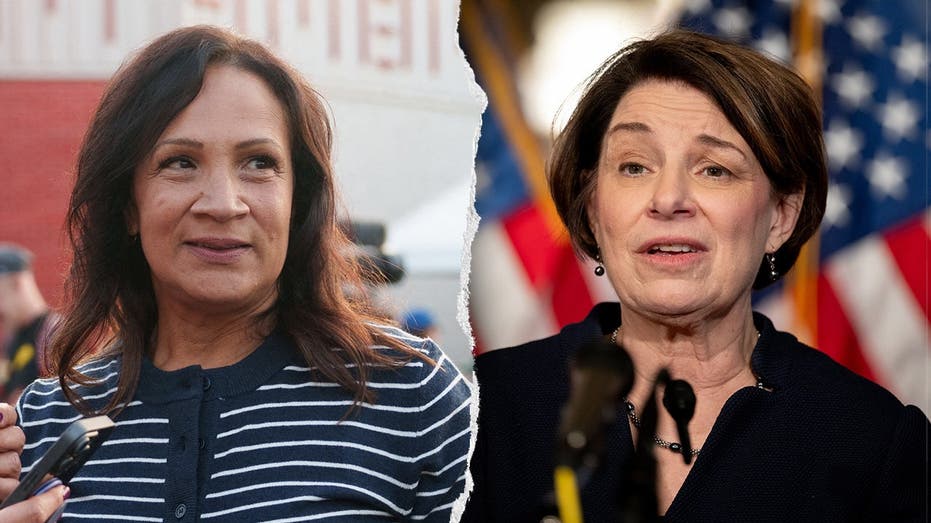
Minnesotaâs gubernatorial candidates clashed over the stateâs fraud scandals in their second debate of the week, with Republican House Speaker Lisa Demuth pledging to fire all state commissioners on her first day in office and Democratic Sen. Amy Klobuchar defending her response. The scandals have rocked the North Star State, raising questions about how large-scale abuse of state programs went undetected and putting government oversight at the center of the governorâs race. “Fraud unchecked here in the state of Minnesota has gone far too long, and it has finally come to the surface,” Demuth said. MINNESOTAâS ANTI-FRAUD SPENDING HAS QUIETLY BALLOONED, LEAVING TAXPAYERS TO PAY FOR FAILURE TWICE “The thing that I will do on day one is I am going to be firing all commissioners, choosing new commissioners that are expert in their field, that will carry out the accountability and transparency that is needed in our state. We have to change the culture of fraud.” Klobuchar called Demuthâs remarks “absurd” and said she contacted U.S. Attorney Andy Luger after the fraud came to light to ask what prosecutors needed. “He said, ‘I need more prosecutors’,” Klobuchar said. “I called the highest level of the Justice Department, and I got him those prosecutors.” TIM WALZ SAYS HE TAKES RESPONSIBILITY FOR MINNESOTA FRAUD BY NOT RUNNING FOR RE-ELECTION Klobuchar also said she would have caught the fraud earlier, while criticizing Walzâs response. “Tim Walz should have caught the fraud earlier and he should have done more,” she said. She also sought to distinguish herself from the outgoing governor and criticized Demuth for not clearly separating herself from President Donald Trump. “We donât need a rubber stamp of Donald Trump in the governorâs office,” Klobuchar said. Demuth countered that Klobuchar had not identified specific policies on which she would break with Walz, whom Klobuchar has called an “incredible governor.” ‘WE HAVE NOT SLOWED DOWN’: MINNESOTA NOT OUT OF THE WOODS ON MASSIVE FRAUD SCANDAL, EXPERT WARNS Beyond fraud, Klobuchar and Demuth used the debate to draw broader contrasts over the economy, taxes, public safety and the direction of the state. Both candidates have ruled out tax increases, but Demuth has argued Minnesota needs to rein in spending and regulations, while Klobuchar has emphasized lowering costs for health care, housing and child care. The race will also make history regardless of the outcome, producing Minnesotaâs first female governor. A Demuth victory would additionally make her the stateâs first Black governor.
Trump dominates El-Sayed’s attacks against Rogers, but GOP rival offers unexpected policy split
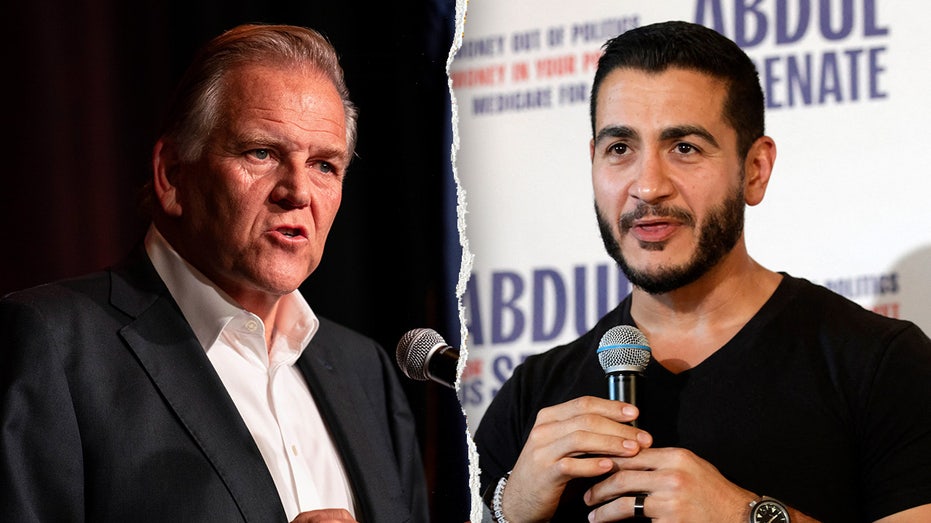
President Donald Trump was the unofficial third person onstage at Wednesday’s Michigan U.S. Senate debate, as Democrat Abdul El-Sayed repeatedly invoked him while seeking to cast Republican Mike Rogers as Trump’s “sock puppet.” El-Sayed mentioned Trump 18 times during the hour-long debate and repeatedly called Rogers’ responses “MAGA bingo,” accusing the Republican of relying on Trump-aligned talking points. Rogers, however, broke with Trump on a couple of trade issues. The phrase became a running theme throughout the night, with El-Sayed declaring “MAGA bingo” after Rogers accused him of supporting socialist policies, open borders and defunding the police. Rogers eventually turned the attack back on his opponent, suggesting that the real bingo game was every time El-Sayed included Trump in his answer. Rogers, however, did not align with Trump on every issue. He split with Trump on trade, calling the president’s tariffs a “mixed bag” and saying tariffs on Canada may have been “not well thought through.” âDESTROYING THE AMERICAN WAY OF LIFEâ: EL-SAYEDâS POLITICAL ORBIT COMPLICATES EFFORT TO MODERATE HIS IMAGE He also opposed Chinese automakers building vehicles in the United States, saying during the debate that Congress should ban the ability for the Chinese to build cars in the United States. El-Sayed countered by pointing out that Trump has said he would be open to Chinese automakers building vehicles in the United States and questioned whether Rogers would stand up to Trump on the issue. Wednesday evening marked the second debate between El-Sayed and Rogers, just weeks before Michigan’s midterm election. The battle for the swing state’s open Senate seat has drawn national attention not only because it could help determine control of the upper chamber, but because it has emerged as a major test of the Democratic Party’s progressive wing in a key battleground state. El-Sayed, backed by progressive heavyweights including Sen. Bernie Sanders, I-Vt., and Rep. Alexandria Ocasio-Cortez, D-N.Y., has campaigned on a progressive agenda that includes Medicare for All, higher taxes on the wealthy, ending U.S. military aid to Israel and abolishing ICE. While El-Sayed worked to paint Rogers as a Trump-aligned “corporate politician,” Rogers repeatedly branded his Democratic opponent as having a “pattern of deception,” accusing him of misrepresenting his record and shifting his positions. MICHIGAN SENATE HOPEFUL ABDUL EL-SAYED FIRES BACK AT CNN CHOOSING TO ‘FIXATE’ ON ‘DEFUND THE POLICE’ COMMENTS Throughout the debate, Rogers cast El-Sayed as being outside the political mainstream, tying the Democrat and his policies to the Democratic Socialists of America and hammering him over his past support for defunding the police. Rogers also claimed that some of El-Sayed’s donors and supporters were tied to Hamas, Hezbollah and the Muslim Brotherhood. At one point, Rogers questioned El-Sayed’s allegiance to the country after accusing El-Sayed of having donors tied to Hamas, asking, “Are you for America or are you for these terrorist groups overseas?” The most contentious moment of the debate came during a question on public safety, when Rogers hammered El-Sayed over his past support for defunding the police, accused him of deleting social media posts on the issue and pointed to El-Sayed’s past comments involving former Egyptian President Mohamed Morsi, who was backed by the Muslim Brotherhood. El-Sayed fired back that it was “beneath” Rogers to question his commitment to the Constitution, declaring that he was “proud to be an American” and calling Rogersâ line of questioning “shameful.” ROGERS ARGUES EL-SAYED IS VULNERABLE WITH 2 TRADITIONALLY DEMOCRATIC BLOCS AS OBAMA HEADS TO MICHIGAN El-Sayed, a Muslim and first-generation American whose parents emigrated from Egypt, has faced scrutiny over his rhetoric on the war in Gaza and his positions on Israel, leading some members of Michigan’s Jewish community to openly disavow the Democratic candidate. During the debate, Rogers said that his campaign was doing well with the Jewish community, which he claimed is fearful of El-Sayed’s rhetoric. Rogers said that El-Sayed was too “extreme” for Michigan, pointing to prominent Democrats who said they can’t back the party’s nominee, including the former Michigan Democratic Party chairman and the former finance chair for Sen. Elissa Slotkin’s campaign. Michigan Republicans echoed that argument following the debate, pointing out that El-Sayed used to campaign with Twitch streamer Hasan Piker, who once said that America deserved the 9/11 terrorist attacks. “We cannot afford Abdul El-Sayed’s far-left, big-government policies, and we cannot risk electing a person who campaigns with the likes of Hasan Piker and seemingly justified the horrific terrorist attack targeting children and the Jewish community in Bloomfield Hills,” MIGOP Chairman Jim Runestad said in a statement.
ICE crackdown divides swing state candidates as GOP nominee vows to mandate sheriff cooperation
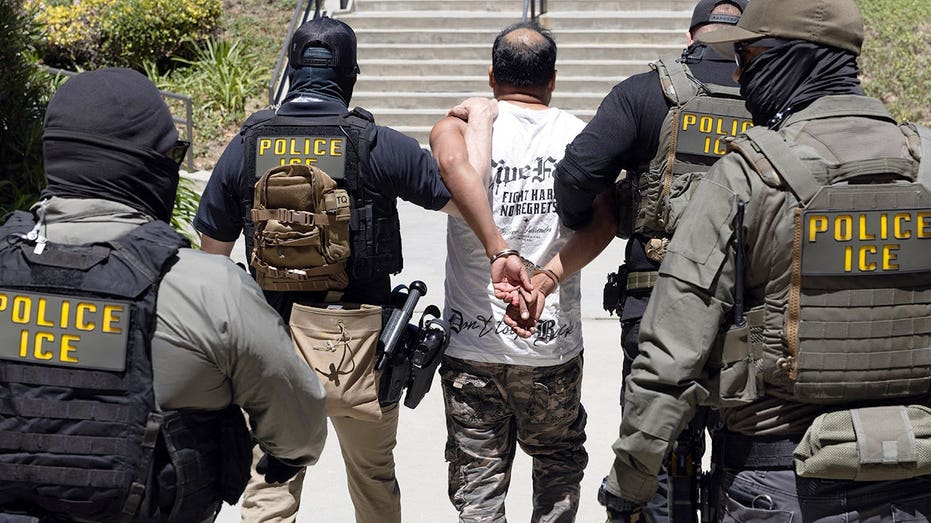
Republican Wisconsin gubernatorial nominee Tom Tiffany vowed Wednesday to mandate cooperation between local sheriffs and federal immigration authorities, drawing a sharp contrast with Democrat David Crowley over President Donald Trump’s immigration crackdown during their general election debate. Tiffany said Wisconsin law enforcement agencies should be required to honor federal immigration detainers, arguing that coordination with ICE allows authorities to remove illegal immigrants accused of crimes while they are still being held in county jails. “I will make sure that local, county and state law enforcement coordinate with federal law enforcement,” Tiffany said in the debate hosted by WISN-TV. VIRGINIA SANCTUARY COUNTY IGNORES 1,670 DETAINER REQUESTS OVER 2 YEARS, HOUSE JUDICIARY COMMITTEE FINDS Asked directly whether he would mandate that cooperation by law, Tiffany replied: “Yes, I believe we should. They should honor detainers.” Crowley, the Milwaukee County executive, said he would not support a blanket ban on cooperation with federal immigration authorities and agreed that immigrants convicted of crimes should be deported. But he called for restrictions on ICE operations, including barring contracts between local law enforcement and ICE, requiring judicial warrants for agents to enter jails and prisons and prohibiting agents from wearing masks. “We need to make sure that we’re protecting people’s civil liberties,” Crowley said. Immigration enforcement has become an increasingly visible flashpoint in Wisconsin, where ICE arrests surged this summer as the Trump administration expanded its nationwide deportation push. TRUMP REAFFIRMS ICE ARREST POLICY AFTER CONFUSING GUIDANCE SPARKS ALARM AMONG AGENTS Trump’s immigration crackdown has increasingly collided with state and local governments, putting sheriffs and police departments at the center of a national fight over how far local authorities should go to help federal agents carry out the president’s mass deportation agenda. That debate is already playing out across Wisconsin. Twenty county law enforcement agencies in the state participate in ICE’s 287(g) program, which allows designated local officers to perform certain immigration enforcement functions. Cooperation with ICE has also emerged as an issue in sheriff races in Sauk and Winnebago counties ahead of the November election. SIGN UP TO GET THE POLITICS NEWSLETTER Wisconsin has simultaneously seen a sharp increase in federal immigration enforcement since Trump returned to office. The latest available federal data showed ICE arrests in the state reaching new highs over the summer, with more than 2,100 people detained between January 2025 and the latest reporting period. The issue has become a complicated one for both parties heading into the midterms. Republicans have continued to campaign on border security and immigration enforcement, while Democrats have increasingly focused their attacks on the Trump administration’s deportation tactics and the conduct of ICE agents.
El-Sayed erupts at GOP rival over Muslim Brotherhood accusations in fiery Senate debate
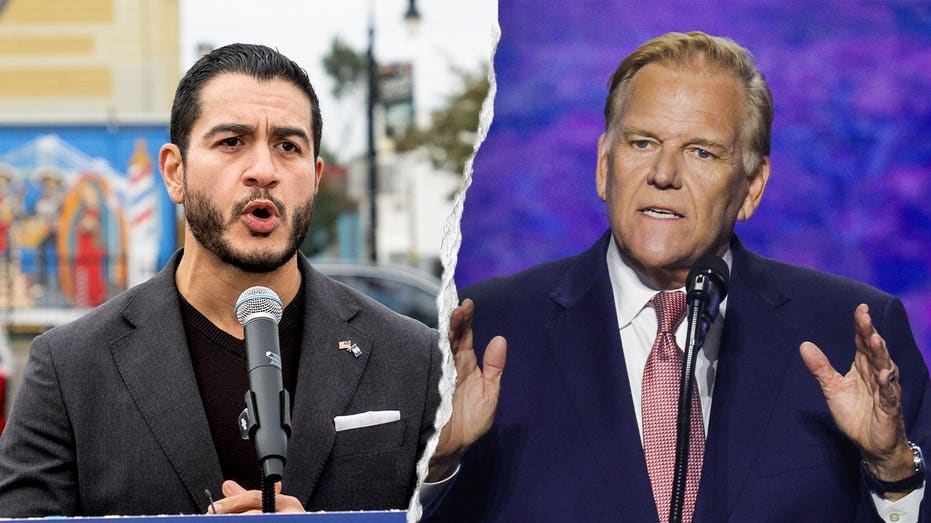
During Wednesday nightâs Michigan U.S. Senate debate, Democrat Abdul El-Sayed passionately denied ties to the Muslim Brotherhood and admonished Republican Mike Rogers for attempting to link him to the organization. “[El-Sayed] was passionate about defunding the police,” Rogers said, responding to a question about law enforcement funding. “As a matter of fact, he asked the Muslim Brotherhood, excuse me, head Morsi in Egypt, to defund the police there, too. I mean, it’s unbelievable.” Rogers was referencing a letter that The Washington Free Beacon reported El-Sayed signed in 2012 calling on the Egyptian president, a member of the Muslim Brotherhood, to purge his nationâs police force. ABDUL EL-SAYED INVOKES JFK TO DISMISS ‘CRAZY’ QUESTIONS OVER FAMILY’S ALLEGED TIES TO MUSLIM BROTHERHOOD “To bring into question my commitment to the Constitution is really beneath you,” El-Sayed responded. “I am proud of America. I’m proud to be an American. I’m proud of our Constitution that guarantees all of us the right to pray as we choose to pray. And the question â that you would ask that â I think is actually really quite shameful. As somebody who’s actually served under that Constitution, it is shameful.” TRUMP LINKS MICHIGAN SENATE CANDIDATE ABDUL EL-SAYED TO MUSLIM BROTHERHOOD: ‘HE’S A CON MAN’ El-Sayed also caught flak after social media posts from his half-sister alleging that their mother was involved in Muslim Brotherhood activism in the 1970s resurfaced. El-Sayed has denied personal or family ties to the organization and maintained that he was not raised by his biological mother. MIKE ROGERS PRESSES CNN’S DANA BASH ON WHY THE PRESS IS ‘EAGER’ TO DEFEND ABDUL EL-SAYED “He keeps raising this question about this association with the organization,” El-Sayed said at the debate. “I’ve never been a part because my mom, who’s a nurse in Missouri, it doesn’t make any sense. And it’s actually really quite beneath you, Mike. It’s really quite beneath you.” There is no evidence to suggest that El-Sayed has any affiliation with the Muslim Brotherhood. “I know you want to make this about you being a victim,” Rogers said. “This is about an ideology. An ideology that’s banned in five Muslim countries, an ideology that’s banned in another six different countries, an ideology that is very concerning to law enforcement in the United States because they use it for funding overseas operations.” “Mike Rogers demonstrated yet again why he is the commonsense, steady hand Michiganders want to see in the U.S. Senate,” Michgian GOP Chairman Jim Runestad said following the debate. “We cannot afford Abdul El-Sayed’s far-left, big-government policies, and we cannot risk electing a person who campaigns with the likes of Hasan Piker and seemingly justified the horrific terrorist attack targeting children and the Jewish community in Bloomfield Hills.” The chair of the Michigan Democratic Party, meanwhile, stated that “the choice this November is clear: Abdul El-Sayed is the candidate who will always put Michigan first, while Mike Rogers will only ever fight for Donald Trump, his wealthy donors and himself.”
France in flames is preview of what ‘DSA’ Democrats want for US, senator warns
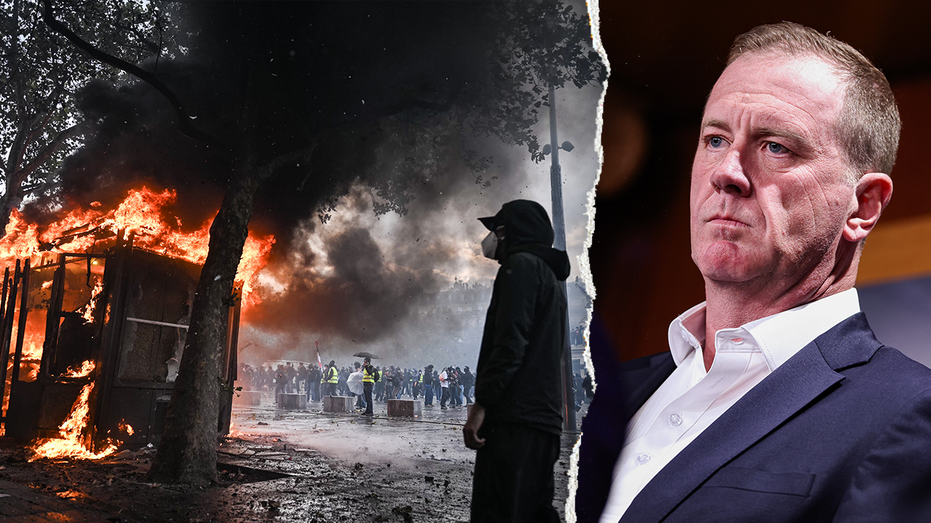
The chaos engulfing France is a preview of what Democrats want for America, Sen. Eric Schmitt warned, contrasting the unrest with new manufacturing jobs and a federal crime crackdown in Missouri that he credits to cooperation with the Trump administration. “You see what’s happening in France. That’s exactly what they want here, the DSA Democrats,” the Missouri Republican told Fox News Digital. His warning comes as riots, fires and looting have swept France after protests over rising living costs and strained public services turned violent, prompting curfews in parts of Paris and other cities. “I think the Democrat Party at this point is sort of post-American and anti-Western civilization,” Schmitt said. VIOLENT FAR-LEFT RIOTS IN FRANCE ARE ‘CHILLING WARNING’ FOR AMERICANS AT HOME, MIKE JOHNSON SAYS With control of the House “up for grabs,” Schmitt argued, Republicans need to make the stakes clear while showing voters what they have delivered. INSIDE THE HOUSE GOP’S 4-WEEK BATTLE PLAN TO SAVE ITS MAJORITY Asked what a Democratic House would mean for Trump’s agenda, Schmitt accused Democrats of obstructing Republican efforts on immigration, permitting reform and regulations. ‘SQUAD’ DEMOCRAT FORMALLY INTRODUCES BILL TO ABOLISH ICE, BORDER PATROL AND DISMANTLE DHS He warned that Democratic control could jeopardize funding for Immigration and Customs Enforcement and revive what he described as the political weaponization of government under former President Joe Biden. But Schmitt also argued Republicans need to give voters a reason to support them, pointing to jobs and public safety as areas where he says cooperation with the Trump administration is paying off. KEY AMERICAN INDUSTRY SEEING BLUE-COLLAR JOBS BOOM AS TRUMP’S RE-SHORING POLICIES PAY OFF In Missouri, he highlighted Boeing’s selection to build the Air Force’s F-47 and the Navy’s next-generation F/A-XX fighter as a potentially transformative investment in American manufacturing. Boeing secured the Navy contract in September after winning the Air Force program last year. BERNIE SANDERS ADMITS DEMOCRATS FAILED WORKING-CLASS VOTERS ON ECONOMICS, DRIVING THEM TO DONALD TRUMP Schmitt, a member of the Senate Armed Services Committee, said the programs would mean 7,000 direct jobs, with additional opportunities for suppliers and surrounding businesses. “It means that the goal we’ve been fighting for, which is that St. Louis is the defense tech capital of the United States of America, is coming true,” he said. TRUMP SAYS POLLS ‘DON’T ACCOUNT FOR ONE THING,’ AS HE PLEDGES TO DEFEAT COMMUNISTS ‘ONCE AND FOR ALL’ Schmitt said he worked with Trump and administration officials to help land the programs, describing them as “generational opportunities” for Missouri workers. “You think of the good-paying jobs that’s going to mean for generations to come, it’s just a game changer,” he said. He also tied the aircraft programs to the broader competition with China, saying the next generation of fighters would help meet military demands in the Pacific. On public safety, Schmitt pointed to Operation Show Me Justice, an ATF-led enforcement surge that resulted in 435 arrests and the seizure of 166 firearms in St. Louis, according to the Justice Department. Authorities also seized 81 kilograms of drugs and more than $1.25 million linked to suspected illegal gun and drug transactions during the operation, which officials announced had concluded Oct. 15. Schmitt said his conversations with administration officials have carried a straightforward request for his hometown. TRUMP’S LAW-AND-ORDER BLITZ MARKS ONE YEAR WITH EYE-POPPING HAUL OF SUSPECTS, GUNS IN BLUE CITY “St. Louis, we need your help,” he said. The former Missouri attorney general described the toll of violence on families, including grandparents cleaning up broken glass and parents burying their children. “We don’t need to accept this,” he said. “We just don’t need to accept the idea that violent crime needs to be in the headlines every single day.” He pledged the effort would continue beyond the surge. “This isn’t a one-and-done deal. There are more resources coming,” Schmitt said. OMAR’S NEW LEGISLATION TARGETING ICE SPARKS OUTRAGE WHEN THE INTERNET SEES WHAT’S IN IT: ‘UN-AMERICAN’ For families wanting to send children safely to school, visit a park or attend a Cardinals game downtown, he said the goal is a better quality of life. “I think the message is help is on the way, and there are real tangible results now, not just rhetoric, not just empty promises,” Schmitt said. “We’re not letting up.” Schmitt’s third major priority is modernizing St. Louis Lambert International Airport, an effort he linked to the region’s aerospace growth and aviation history. His Modern Skies Act would fund improvements to air traffic control technology, towers and airport terminals. He said midsize airports need help securing investments that larger hubs can more readily finance. “St. Louis is the gateway to the West,” he said. “It deserves a world-class airport.” The proposal remains a legislative push rather than a guaranteed funding award for Lambert. Transportation Secretary Sean Duffy said during an October visit that airport funding would be competitive. For Schmitt, those priorities form part of the argument Republicans need to make as voters weigh control of Congress. He cast the election as “common sense versus crazy,” but cautioned that Republicans cannot assume their supporters will show up. “I just don’t think you can take anything for granted,” Schmitt said. “I think we have to fight for every vote and tell an important story.” “I think if we do that, we’re gonna hold on to the Senate, and the House is up for grabs.”
Fox News Poll: Gender gap and pocketbook pain shape Ohio Senate race
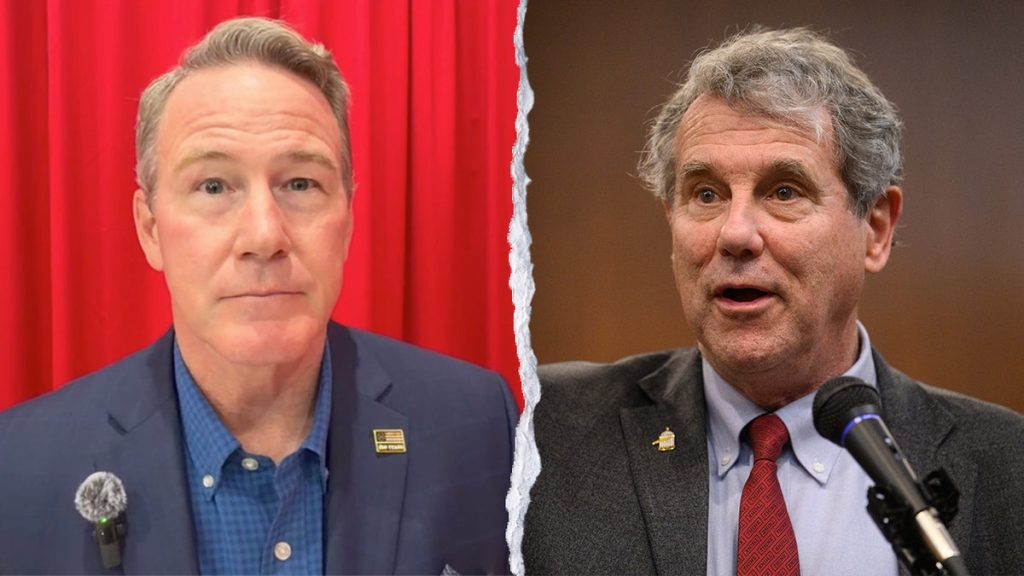
Powered by a clear favorability advantage, a large gender gap and voter discontent with both household finances and President Donald Trump, former Democratic Sen. Sherrod Brown has the edge over appointed Republican Sen. Jon Husted in the Ohio Senate race. A Fox News survey of likely Ohio voters finds Brown leads Husted, 52% to 47%. Brown’s advantage is anchored by his stronger personal standing, with his favorability rating 2 points above water (50% favorable, 48% unfavorable), while Husted’s rating sits 13 points underwater (42% favorable, 55% unfavorable). FOX NEWS POLL: COST-OF-LIVING CONCERNS WEIGH ON GOP IN MIDTERMS More Brown supporters (88%) than Husted backers (83%) say they’re certain of their vote. FOX NEWS POLL: IT’S A LONE STAR SENATE SHOWDOWN BETWEEN TALARICO AND PAXTON Economic unease creates another headwind for Husted because about 2½ times as many voters say their financial situation is worse than two years ago rather than better (46% vs. 19%). Those who say things are worse favor Brown by 49 points, while those who say their finances are better or the same favor Husted by 51 and 24 points, respectively. The president’s standing in Ohio adds to Husted’s difficulties. Trump won the Buckeye State with 55% of the vote in 2024, but just 43% now approve of his job performance. A 57% majority disapproves, with 46% saying they “strongly” disapprove. Meanwhile, 52% express concern that Husted is too close to Trump, including 38% who are extremely concerned. Brown faces similar concerns about being too liberal, as 50% are worried, though fewer, 30%, are extremely concerned. In the matchup, women favor Brown by 14 points, while men support Husted by 4, an 18-point gender gap. Brown also has advantages among voters under 35, voters with a college degree, union voters and those living in urban and suburban areas. Husted relies on rural communities, non-college White men and married voters and has a narrow edge among those ages 65 and up. Partisan crossovers further tilt the field toward the challenger. While Husted receives 90% of Republicans, 9% cross over to back Brown. Some 97% of Democrats support Brown, while just 2% choose Husted, and Brown carries independents by nearly two to one. Voters who view both Senate candidates unfavorably prefer Husted by nearly 20 points. Brown is up by 9 points among those who are extremely interested in the election and leads by 29 points among the 15% of Ohioans who say they have already voted. Legislative preference tilts toward the Democrats, with Ohioans dividing 50% for Democratic control of the U.S. Senate and 48% for Republican control. In the governor’s contest, likely voters favor Democrat Amy Acton over Republican Vivek Ramaswamy by 50% to 48%. Women favor Acton by 10 points, while men back Ramaswamy by 7, a nearly identical gender gap to the Senate race. CLICK HERE FOR CROSSTABS AND TOPLINE Ticket splitting goes in both directions: 8% of Brown supporters cross over to Ramaswamy, while 6% of Husted supporters back Acton. The survey was completed before a negative television ad from Ramaswamy’s campaign featuring Acton’s estranged mother became public. Conducted October 15-19, 2026, under the joint direction of Beacon Research (D) and Shaw & Company Research (R), this Fox News Poll includes interviews with a sample of 2,005 Ohio registered voters randomly selected from a statewide voter file. Respondents spoke with live interviewers on landlines (219) and cellphones (1,306) or completed the survey online after receiving a text message (480). Results based on the registered voter sample have a margin of sampling error of ±2 percentage points, and, for the subsample of 1,592 likely voters, it is ±2 percentage points. Sampling error for results among subgroups is higher. In addition to sampling error, question wording and order can influence results. Sources for developing weight targets include the most recent American Community Survey, Fox News Voter Analysis and voter file data. Weights are generally applied to age, race, education and area variables to ensure the demographics of respondents are representative of the registered voter population. Likely voters are based on a probabilistic statistical model that relies on past vote history, interest in the current election, intention to vote, age, education, race, ethnicity, and marital status. Results among subgroups are only shown when the sample size is at least N=100. Fox News’ Victoria Balara contributed to this report.
Fox News Poll: Texas Senate race galloping toward a photo finish
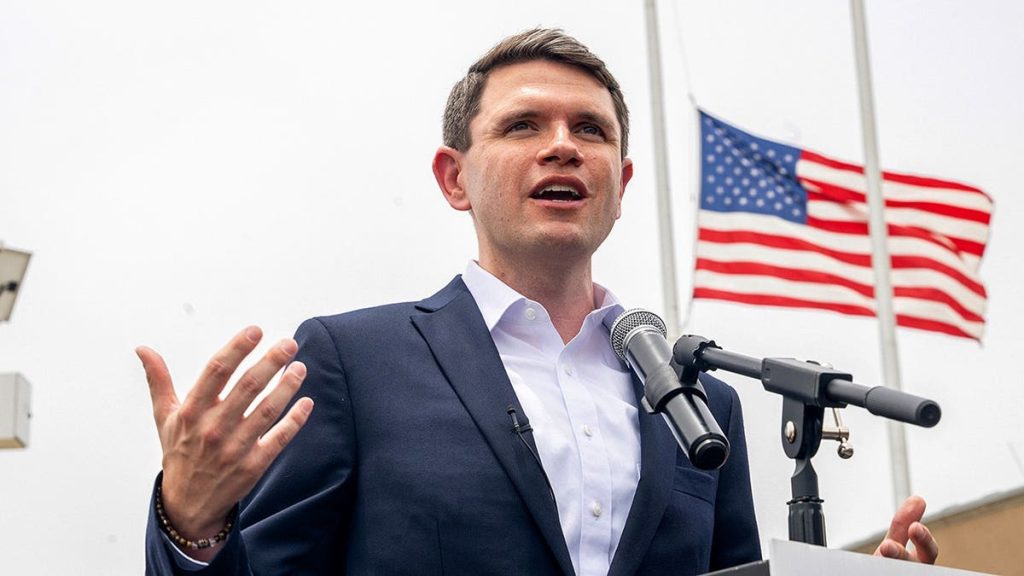
Texas hasn’t gone blue in a statewide race in more than 30 years, but that streak could face a serious test this year. A new Fox News poll finds that while Texas likely voters favor Republicans retaining control of the U.S. Senate and give incumbent Republican Gov. Greg Abbott an edge in his re-election bid, the Senate race remains deadlocked. The survey, released Wednesday, finds Democrat James Talarico and Republican Ken Paxton tied at 49% each among Texas likely voters in the race to replace Sen. John Cornyn, who lost the GOP primary to President Trump-backed Paxton. Last month, Talarico was up by 2 points among likely voters (51%-49%). The shift to a tie reflects Paxton consolidating support among conservatives, rural voters, suburban women and voters who backed Cornyn in the primary. FOX NEWS POLL: TUREK, HINSON IN CLOSE IOWA SENATE RACE Although Paxton is falling short of Trump’s 2024 margins, he has strengthened his support a tad among both men (+1) and women (+1) since September, while Talarico slightly lost support (-1 and -2, respectively). Talarico leads by wide margins among Black voters (+65 points), urban voters (+29), those under age 30 (+28), and women with a college degree (+23). Paxton’s strongest groups include White evangelical Christians (+52), White men without a college degree (+32), rural voters (+21) and those age 65 and up (+18). The survey finds Hispanic voters swinging back toward the Democrats. After backing former President Joe Biden by 25 points in 2020, they favored Trump by 1 point in 2024, according to the Texas Fox News Voter Analysis. This key voting bloc now favors Talarico by 30 points (64%-34%) and prefers Democratic control of the U.S. Senate by 29 points. Overall, when it comes to Senate control, Texans choose Republicans by 4 points (51% to 47%), up from +1 point in September. Talarico’s stronger party loyalty is another reason the race is close: 98% of Democrats support him, compared with 90% of Republicans supporting Paxton. Nearly 3 in 10 non-MAGA Republicans cross party lines to back Talarico. FOX NEWS POLL: COST-OF-LIVING CONCERNS WEIGH ON GOP IN MIDTERMS Democrats also retain an enthusiasm edge: 69% are extremely interested in this year’s election, compared with 61% of Republicans. Extremely interested voters back Talarico by 7 points. “The race is going to come down to two basic questions,” says Republican pollster Daron Shaw, who helps conduct the Fox News Poll with Democrat Chris Anderson. “Do disaffected Republicans show up and, if so, do they grit their teeth and vote for a candidate who they have serious reservations about?” Views of Talarico are net positive, albeit by just 1 point (49% favorable, 48% unfavorable), while Paxton’s ratings are underwater by 17 (41% favorable, 58% unfavorable). Among “double haters,” voters who view both candidates negatively, Paxton leads by 50 points. Voters express similar levels of concern about both candidates: 53% worry Talarico’s positions are too liberal, while 50% are concerned Paxton is too close to Trump. The intensity of these concerns is nearly identical, with 36% extremely concerned about Talarico and 37% about Paxton. In 2024, Trump won the Lone Star State by nearly 14 points, but his job rating is currently underwater by 9 points (45% approve, 54% disapprove). Still, Paxton draws support from 13% of voters who disapprove of Trump, while 6% of Trump approvers back Talarico. When it comes to their personal finances, more than twice as many voters say they are worse off (43%) than better off (20%) compared with two years ago; 36% say they are about the same. Voters who are worse off back Talarico by 45 points, while those who are better off (+49) or about the same (+26) favor Paxton. The governor’s race gives Republicans more breathing room: Abbott edges his Democratic challenger, Gina Hinojosa, by 5 points (52% to 47%), unchanged since September. Abbott has a positive job rating (50% approve, 48% disapprove), and nearly all who approve support him in the race, as do 9% of those who disapprove. CLICK HERE FOR CROSSTABS AND TOPLINE Abbott also benefits from slightly stronger party loyalty and more ticket-splitting among Talarico supporters: 7% support Abbott, compared with 2% of Paxton supporters who back Hinojosa. Conducted October 15-19, 2026, under the joint direction of Beacon Research (D) and Shaw & Company Research (R), this Fox News Poll includes interviews with a sample of 2,011 Texas registered voters randomly selected from a statewide voter file. Respondents spoke with live interviewers on landlines (205) and cellphones (1,303) or completed the survey online after receiving a text message (503). Results based on the registered voter sample have a margin of sampling error of ±2 percentage points, and for the subsample of 1,398 likely voters it is ±2.5 percentage points. Sampling error for results among subgroups is higher. In addition to sampling errors, question wording and order can influence results. Sources for developing weight targets include the most recent American Community Survey, Fox News Voter Analysis and voter file data. Weights are generally applied to age, race, education and area variables to ensure the demographics of respondents are representative of the registered voter population. Likely voters are based on a probabilistic statistical model that relies on past vote history, interest in the current election, intention to vote, age, education, race, ethnicity and marital status. Results among subgroups are only shown when the sample size is at least N=100.
US pulls personnel from Saudi Arabia as kingdom comes under Houthi fire
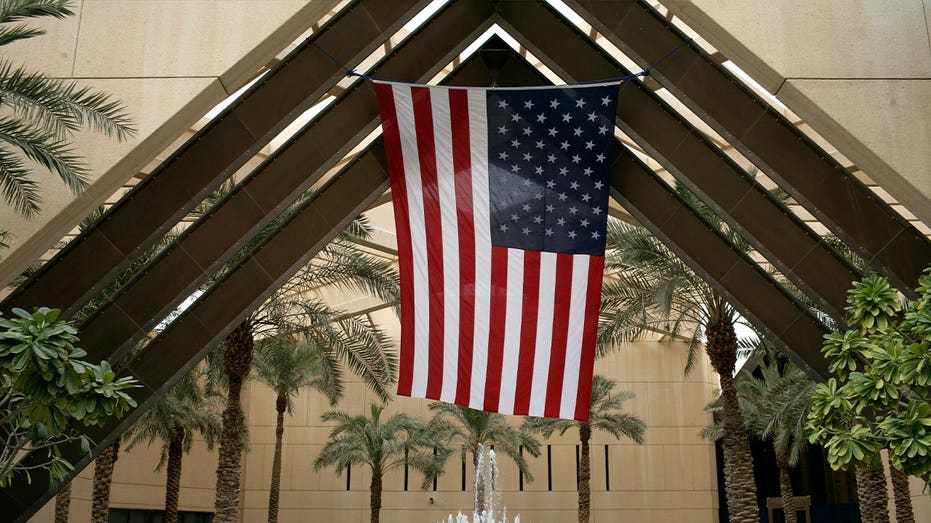
The Trump administration has ordered non-emergency U.S. government employees and their families to leave Saudi Arabia as deadly Houthi attacks intensify across the kingdom, raising the stakes as President Donald Trump weighs direct military action against the Iran-backed group. State Department spokesperson Tommy Pigott confirmed Wednesday that the mandatory departure order applies only to Saudi Arabia, pushing back on reports that Washington was preparing a broader evacuation of diplomatic personnel across the Gulf. “The U.S. Department of State issued an ordered departure for non-emergency U.S. government employees and their family members in Saudi Arabia only,” Pigott said. HOW SAUDI ARABIA’S DEFENSE VULNERABILITIES COULD BECOME TRUMP’S PROBLEM AMID HOUTHI ONSLAUGHT The order comes amid a surge in Houthi missile and drone attacks that has left civilians dead, disrupted air travel and sent Saudi Arabia scrambling for additional missile defenses. “Iranian-supported Houthis have increasingly engaged in hostilities against Saudi Arabia, including attacks on civilian airports and other critical infrastructure resulting in civilian casualties and severe travel disruptions,” Pigott added. President Donald Trump is weighing whether to launch direct U.S. military strikes against the Houthis, whose expanding missile and drone campaign has increasingly threatened Saudi cities, airports and energy infrastructure. Houthi strikes and attempted strikes on Saudi Arabia more than doubled in a single week this month, according to the Armed Conflict Location & Event Data Project, with airports in Riyadh, Jizan, Najran, Dammam and Abha targeted since Oct. 5. The deadliest barrage struck King Khalid International Airport in Riyadh, killing at least 13 people and wounding more than 300. SAUDI ARABIA ON EDGE: ICONIC KINGDOM CENTRE SENDS WORKERS HOME AMID HOUTHI ATTACKS The escalating attacks have prompted Saudi Arabia to seek additional military support from its allies. Britain announced Tuesday that it would deploy Typhoon fighter jets to help defend Saudi cities and critical infrastructure, while Egypt is assisting the kingdom and Israel has offered to help. Riyadh has also asked Washington for additional missile interceptors, though U.S. officials have warned that global demand is straining available supplies. “I also talked to Saudi Arabia today; they’d like interceptors. Israel would like interceptors. We would like interceptors. Every country in the world would like interceptors,” Secretary of State Marco Rubio said Tuesday. Rubio described the weapons as “probably the most in-demand product right now in the defense field,” acknowledging that the United States must balance requests from allies against its own military requirements. The growing threat has exposed the difficulty of defending Saudi Arabia’s vast territory against relatively inexpensive missiles and drones, even with some of the world’s most sophisticated air defenses. “Saudi Arabia is a huge geography to protect, and this speaks to a larger threat we’re facing globally: a relatively small nonstate actor can pose a serious challenge to even a sophisticated and extremely expensive military,” Farea Al-Muslimi, a research fellow at Chatham House, told Fox News Digital in an interview published Wednesday. “The Houthis can impose enormous costs without having to spend very much themselves,” he said. Trump has left open the possibility of direct military intervention against the Houthis, telling reporters earlier this month that the U.S. could join Saudi strikes against the group. “We may. We’re gonna look at it,” Trump said. “We’ll make a decision. We move very quickly.” SIGN UP TO GET THE POLITICS NEWSLETTER The U.S. conducted a roughly two-month bombing campaign against Houthi targets in Yemen in 2025 before Trump halted the operation following an Oman-brokered agreement. The U.S. continues to provide intelligence and targeting support to Saudi Arabia as Trump weighs whether to launch another round of strikes against the Houthis.
Dr Oz takes Americans behind the doors of ‘clubhouse for crooks’ as feds hunt Medicare fraud
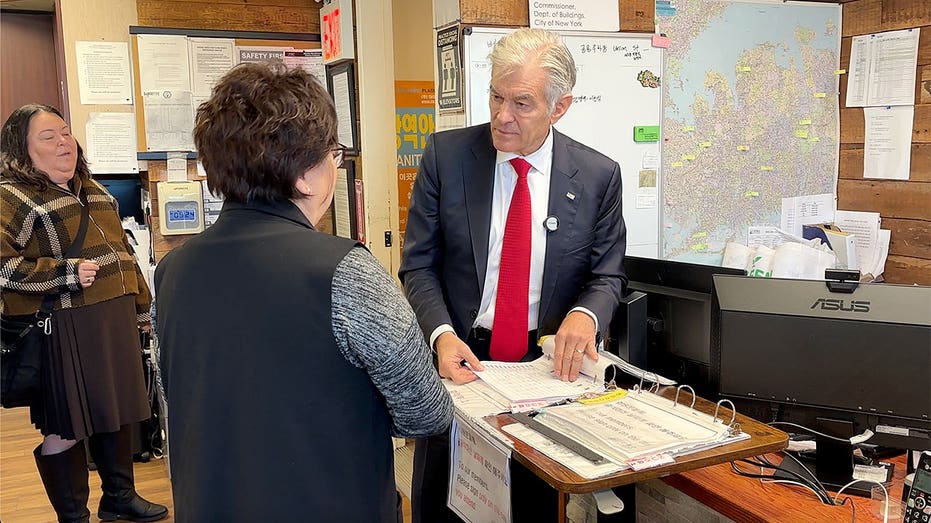
FIRST ON FOX: Centers for Medicare & Medicaid Services Administrator Dr. Mehmet Oz is taking Americans inside the Trump administration’s war on healthcare fraud in a new documentary highlighting massive Medicare schemes, suspected hospice scams and allegations of organized crime involvement. The 27-minute film, “War on Fraud,” first obtained by Fox News Digital, follows Oz across the country as he spotlights alleged fraud schemes targeting taxpayer-funded health care programs and details the administration’s efforts to crack down on those responsible. “All these programs come back to one basic issue: Fraudsters and criminals don’t give a s— about you. They want your money, and they will walk all over your health, sacrifice your life and betray society’s trust to get your hard-earned money,” said Oz in the video. The documentary follows Oz across the country as he investigates suspected fraud involving Medicare, Medicaid, hospice care and other programs, with appearances from HHS Secretary Robert F. Kennedy Jr. and CMS Deputy Administrator Kim Brandt. DR OZ SAYS 800 HOSPICE PROVIDERS SUSPENDED IN CALIFORNIA OVER ALLEGED $1B MEDICARE FRAUD SCHEME Fox News Digital accompanied Oz Tuesday as he confronted workers at New York City senior day care centers suspected of questionable Medicaid billing practices during a sweeping federal fraud investigation. More than 80 New York City providers received warning letters from CMS over questionable billing practices as part of a broader operation involving the FBI, HHS-OIG, NYPD and other agencies. “FBI New York, along with multiple other law enforcement agencies are conducting law enforcement activity in the area of Queens, Staten Island, Brooklyn and other locations around New York City in connection with ongoing federal investigations,” an FBI spokesperson said of the crackdown. ON THE STREETS WITH DR OZ AS SURPRISE FRAUD CRACKDOWN SENDS DAYCARE DIRECTORS SCRAMBLING Oz flagged what he described as a series of irregularities, including low attendance despite high Medicaid billing, questionable wheelchair transportation charges, seniors entering without signing in, inconsistent attendance claims and sign-in sheets containing future-dated entries. The crackdown comes as CMS is pulling back the curtain on its broader war on fraud, releasing a new documentary that takes viewers inside the agency’s efforts to track down schemes siphoning taxpayer dollars from America’s healthcare programs. In one segment of the film, Oz highlights hospice care as a hotbed for potential fraud, pointing to the Los Angeles area, where he says roughly 2,000 hospice providers operate, a concentration he argues has raised serious concerns about fraudulent billing. FBI ADDS 2 FUGITIVES TO ‘MOST WANTED FRAUDSTERS’ LIST AMID HISTORIC $6.5B HEALTHCARE TAKEDOWN: PATEL Oz claims in the documentary that Russian organized crime groups are involved in some suspected hospice fraud operations, alleging that unsuspecting patients are being enrolled in hospice care under false pretenses. He claims the schemes involve falsely declaring patients terminally ill and misleading them into enrolling in hospice care, potentially limiting their access to treatment for conditions classified as terminal while allowing fraudulent operators to bill Medicare for services under false pretenses. Minnesota has become a major focus of the Trump administration’s broader crackdown on government benefits fraud following a series of high-profile scandals involving taxpayer-funded programs. VANCE-LED TASK FORCE CUTS OFF $1.4B FROM HOME HEALTH, HOSPICE PROVIDERS SUSPECTED OF FRAUD Oz said Minnesota’s $250 million “Feeding Our Future” scandal helped intensify the administration’s focus on large-scale fraud, pointing to a case that erupted into the national spotlight in 2022 and has since produced a wave of federal convictions. The White House Task Force on Fraud, led by Vice President JD Vance, has joined Oz in a media blitz highlighting alleged scams as the administration ramps up its crackdown on corruption in taxpayer-funded programs. The documentary highlights one of the largest alleged Medicare fraud schemes in U.S. history, involving $3.7 billion in fraudulent billing claims tied to medical equipment companies operating in Delray Beach, Florida, according to federal prosecutors. Federal prosecutors allege the scheme involved billing for medical equipment patients never requested or needed, and the accused ringleader fled the U.S. before being captured in Turkey and returned to South Florida to face federal charges. FBI BRINGS BACK FUGITIVE ACCUSED IN $3.7B MEDICARE FRAUD SCHEME AFTER CAPTURE IN TURKEY The documentary also shows Oz during an earlier visit to Flushing, Queens, where he describes a cluster of businesses — including a social adult daycare center, pharmacy and medical center — as a “clubhouse for crooks,” alleging the businesses are part of a fraudulent billing operation. Oz says they recruit seniors, get them in, game the system and they use their ID numbers to charge everybody, “which means they are charging you.” The documentary will be released Wednesday at 4 P.M. ET on Oz’s X account.